Sunday, March 05, 2006
George the Unready
By PAUL KRUGMAN
NY Times, 3/3/06
Iraqi insurgents, hurricanes and low-income Medicare recipients have three things in common. Each has been at the center of a policy disaster. In each case experts warned about the impending disaster. And in each case — well, let's look at what happened.
Knight Ridder's Washington bureau reports that from 2003 on, intelligence agencies "repeatedly warned the White House" that "the insurgency in Iraq had deep local roots, was likely to worsen and could lead to civil war." But senior administration officials insisted that the insurgents were a mix of dead-enders and foreign terrorists.
Intelligence analysts who refused to go along with that line were attacked for not being team players. According to U.S. News & World Report, President Bush's reaction to a pessimistic report from the C.I.A.'s Baghdad station chief was to remark, "What is he, some kind of defeatist?"
Many people have now seen the video of the briefing Mr. Bush received before Hurricane Katrina struck. Much has been made of the revelation that Mr. Bush was dishonest when he claimed, a few days later, that nobody anticipated the breach of the levees.
But what's really striking, given the gravity of the warnings, is the lack of urgency Mr. Bush and his administration displayed in responding to the storm. A horrified nation watched the scenes of misery at the Superdome and wondered why help hadn't arrived. But as Newsweek reports, for several days nobody was willing to tell Mr. Bush, who "equates disagreement with disloyalty," how badly things were going. "For most of those first few days," Newsweek says, "Bush was hearing what a good job the Feds were doing."
Now for one you may not have heard about. The new Medicare drug program got off to a disastrous start: "Low-income Medicare beneficiaries around the country were often overcharged, and some were turned away from pharmacies without getting their medications, in the first week of Medicare's new drug benefit," The New York Times reported.
How did this happen? The same way the other disasters happened: experts who warned of trouble ahead were told to shut up.
We can get a sense of what went on by looking at a 2005 report by the nonpartisan Government Accountability Office on potential problems with the drug program. Included with the report is a letter from Mark McClellan, the Medicare administrator. Rather than taking the concerns of the G.A.O. seriously, he tried to bully it into changing its conclusions. He demanded that the report say that the administration had "established effective contingency plans" — which it hadn't — and that it drop the assertion that some people would encounter difficulties obtaining necessary drugs, which is exactly what happened.
Experts within the Centers for Medicare and Medicaid Services must have faced similar bullying. And unlike experts at the independent G.A.O., they were not in a position to stand up for what they knew to be true.
In short, our country is being run by people who assume that things will turn out the way they want. And if someone warns of problems, they shoot the messenger.
Some commentators speak of the series of disasters now afflicting the Bush administration — there seems to be a new one every week — as if it were just a string of bad luck. But it isn't.
If good luck is what happens when preparation meets opportunity, bad luck is what happens when lack of preparation meets a challenge. And our leaders, who think they can govern through a mix of wishful thinking and intimidation, are never, ever prepared.

Saturday, February 25, 2006
Time for Bush to go
If the CEO of a publicly held company was this incompetent, they would be fired.
Articles of Impeachment for
President George W. Bush
for High Crimes and Misdemeanors
WHEREAS, United States House of Representatives rules allow for setting a federal impeachment in motion by charges transmitted from the legislature of a State or territory; and
WHEREAS, The State of Florida and the former territory of Mississippi have established precedent by referring such charges to Congress, which in each case resulted in Congress ordering a Committee to investigate and report on the charges, and which in one case resulted in the impeachment hearings of Judge Charles Swayne of Florida; and
WHEREAS, George W. Bush, President of the United States, has so conducted himself and his office as to cause the people of the State of Rhode Island to doubt his integrity and to believe that his official actions as president have constituted High Crimes and Misdemeanors having repeatedly and intentionally violated and ignored the United States Constitution and other laws of the United States; and
WHEREAS, George W. Bush has ordered the federalization and deployment of our state's National Guard members overseas and thus has exceeded the authority granted in the provision of the United States Constitution that Congress shall have the power to "provide for calling forth the Militia to execute the laws of the Union, to suppress insurrections and repel invasions," reserving to our State Assembly and Governor the authority to direct the training and arming of members of our state's National Guard for defense of the state; and
WHEREAS, The federalization and deployment of National Guard members has rendered the National Guard force unable to carry out its state activities effectively and thus deprived the state of its Constitutional power to keep the National Guard for defense of our state; and
WHEREAS, George W. Bush has allowed stop-loss orders that violate the mutual understanding between Rhode Islanders in the Armed Forces including the National Guard and our state and nation they agreed to serve; and
WHEREAS, George W. Bush in violation of his constitutional oath faithfully to execute the office of President of the United States and, to the best of his ability, preserve, protect, and defend the Constitution of the United States, and in violation of his constitutional duty to take care that the laws be faithfully executed, committed a felony under 18 U.S.C. 1001, having conspired to exceed his constitutional authority to wage war, in that on March 19, 2003, by his order the United States of America invaded the sovereign country of Iraq in direct defiance of the United Nations Security Council. This constitutes a violation of Chapter 1, Article 2 of the United Nations Charter and a violation of Principal VI of the Nuremberg Charter.
According to Article VI of the United States Constitution "This Constitution, and the Laws of the United States which shall be made in Pursuance thereof; and all Treaties made, or which shall be made, under the Authority of the United States, shall be the supreme Law of the Land." George W. Bush has subverted and violated the principles of democracy by:
1. Providing misinformation to the United Nations Security Council, Congress, and the American people overstating the offensive capabilities of Iraq, including weapons of mass destruction, as justification for military action against Iraq.
2. Repeatedly manipulating the sentiments of the American people by erroneously linking Iraq with the terrorist attacks of September 11th by Al-Qaeda.
3. Repeatedly claiming that satellite photos of sites in Iraq depicted factories for weapons of mass destruction in contradiction with the results of ground inspections by United Nations teams.
4. Stating that "Saddam Hussein recently sought significant quantities of uranium from Africa" in his State of the Union Address after being told by the CIA that this was untrue and that the supporting documents were forged.
5. Influencing, manipulating and distorting intelligence related to Iraq with the intention of using that intelligence to support his goal of invading Iraq.
6. Invading Iraq with United States military forces.
7. Sacrificing the lives of thousands of American soldiers.
8. Killing tens of thousands of Iraqi civilians and conscripts.
9. Rejecting peaceful resolution by acts of UN compliance by Saddam Hussein.
10. Violating the Geneva Convention by abducting and transporting human beings to prisons in foreign countries where they can be subjected to inhumane treatment.
WHEREAS, the administration of the United States' invasions of Afghanistan and Iraq, and handling of the aftermath of Katrina, has resulted in the waste of assets, through incompetence, insufficient oversight, insufficient planning, and no-bid contracts with companies associated with White House officials that are serious conflicts of interest.; and
WHEREAS, George W. Bush has admitted that he willingly and repeatedly directed unwarranted surveillance of U. S. persons, in violation of the Fourth Amendment to the United States Constitution and the Foreign Intelligence Surveillance Act of the United States; and
WHEREAS, George W. Bush committed felonies under 18 U.S.C. 641 and 643 by transferring funds authorized for use in the war in Afghanistan and diverting it to an as-yet unauthorized build-up towards war in Iraq; and
WHEREAS, George W. Bush committed felonies, namely espionage, fraud, or obstruction of justice, through involvement in the cover-up of the leak of Valerie (Plame) Wilson's identity; and
WHEREAS, George W. Bush has approved of torture under the name of stress and duress, has denied the applicability of existing laws and treaties against torture, and has indicated in his signing statement of H.R. 1815 his future intention to continue to disregard such laws and treaties; and
WHEREAS, George W. Bush has appointed unqualified personnel to critical government positions as political favors where their incompetence places American citizens at risk or intentionally blocks information that may require consideration for the public good; and
WHEREAS, George W. Bush has repeatedly acted to expand the power of a unitary executive in violation of the principle of balance of power; and
WHEREAS, George W. Bush, through the above actions has denied the citizens of our state of their rights and their safety; now, therefore, be it
Resolved, by the General Assembly of this state, that our Senators and Representatives in the United States Congress be, and they are hereby, requested to cause to be instituted in the Congress of the United States proper proceedings for the investigation of the governance of the Executive Branch by George W. Bush as President of the United States, and of his acts and doings as such, to the end that he may be impeached and removed from such office; and be it further
Resolved, That the Secretary of State of Rhode Island be, and is hereby, instructed to certify to each Senator and Representative in the Congress of the United States, under the great seal of this state, a copy of this resolution and its adoption by its legislature.
Tuesday, February 14, 2006
We Live in a Fascist State
Much has been said about the possibility that continuted erosion of our civil liberties could cause America to become a "Fascist State". The following article suggests it has already happened. EVERY AMERICAN SHOULD READ THIS!
By Lewis H. Lapham
Harper's Magazine, October 2005
"But I venture the challenging statement that if American democracy ceases to move forward as a living force, seeking day and night by peaceful means to better the lot of our citizens, then Fascism and Communism, aided, unconsciously perhaps, by old-line Tory Republicanism, will grow in strength in our land." -Franklin D. Roosevelt, November 4, 1938
In 1938 the word "fascism" hadn't yet been transferred into an abridged metaphor for all the world's unspeakable evil and monstrous crime, and on coming across President Roosevelt's prescient remark in one of Umberto Eco's essays, I could read it as prose instead of poetry -- a reference not to the Four Horsemen of the Apocalypse or the pit of Hell but to the political theories that regard individual citizens as the property of the government, happy villagers glad to wave the flags and wage the wars, grateful for the good fortune that placed them in the care of a sublime leader. Or, more emphatically, as Benito Mussolini liked to say, "Everything in the state. Nothing outside the state. Nothing against the state."
The theories were popular in Europe in the 1930s (cheering crowds, rousing band music, splendid military uniforms), and in the United States they numbered among their admirers a good many important people who believed that a somewhat modified form of fascism (power vested in the banks and business corporations instead of with the army) would lead the country out of the wilderness of the Great Depression -- put an end to the Pennsylvania labor troubles, silence the voices of socialist heresy and democratic dissent. Roosevelt appreciated the extent of fascism's popularity at the political box office; so does Eco, who takes pains in the essay "Ur-Fascism," published in The New York Review of Books in 1995, to suggest that it's a mistake to translate fascism into a figure of literary speech. By retrieving from our historical memory only the vivid and familiar images of fascist tyranny (Gestapo firing squads, Soviet labor camps, the chimneys at Treblinka), we lose sight of the faith-based initiatives that sustained the tyrant's rise to glory. The several experiments with fascist government, in Russia and Spain as well as in Italy and Germany, didn't depend on a single portfolio of dogma, and so Eco, in search of their common ground, doesn't look for a unifying principle or a standard text. He attempts to describe a way of thinking and a habit of mind, and on sifting through the assortment of fantastic and often contradictory notions -- Nazi paganism, Franco's National Catholicism, Mussolini's corporatism, etc. -- he finds a set of axioms on which all the fascisms agree. Among the most notable:
- The truth is revealed once and only once.
- Parliamentary democracy is by definition rotten because it doesn't represent the voice of the people, which is that of the sublime leader.
- Doctrine outpoints reason, and science is always suspect.
- Critical thought is the province of degenerate intellectuals, who betray the culture and subvert traditional values.
- The national identity is provided by the nation's enemies.
- Argument is tantamount to treason.
- Perpetually at war, the state must govern with the instruments of fear. Citizens do not act; they play the supporting role of "the people" in the grand opera that is the state.
He'd encountered enough opposition to both the New Deal and to his belief in such a thing as a United Nations to judge the force of America's racist passions and the ferocity of its anti-intellectual prejudice. As he may have guessed, so it happened. The American democracy won the battles for Normandy and Iwo Jima, but the victories abroad didn't stem the retreat of democracy at home, after 1968 no longer moving "forward as a living force, seeking day and night to better the lot" of its own citizens, and now that sixty years have passed since the bomb fell on Hiroshima, it doesn't take much talent for reading a cashier's scale at Wal-Mart to know that it is fascism, not democracy, that won the heart and mind of America's "Greatest Generation," added to its weight and strength on America's shining seas and fruited plains.
A few sorehead liberal intellectuals continue to bemoan the fact, write books about the good old days when everybody was in charge of reading his or her own mail. I hear their message and feel their pain, share their feelings of regret, also wish that Cole Porter was still writing songs, that Jean Harlow and Robert Mitchum hadn't quit making movies. But what's gone is gone, and it serves nobody's purpose to deplore the fact that we're not still riding in a coach to Philadelphia with Thomas Jefferson. The attitude is cowardly and French, symptomatic of effete aesthetes who refuse to change with the times.
As set forth in Eco's list, the fascist terms of political endearment are refreshingly straightforward and mercifully simple, many of them already accepted and understood by a gratifyingly large number of our most forward-thinking fellow citizens, multitasking and safe with Jesus. It does no good to ask the weakling's pointless question, "Is America a fascist state?" We must ask instead, in a major rather than a minor key, "Can we make America the best damned fascist state the world has ever seen," an authoritarian paradise deserving the admiration of the international capital markets, worthy of "a decent respect to the opinions of mankind"? I wish to be the first to say we can. We're Americans; we have the money and the know-how to succeed where Hitler failed, and history has favored us with advantages not given to the early pioneers.
We don't have to burn any books.
The Nazis in the 1930s were forced to waste precious time and money on the inoculation of the German citizenry, too well-educated for its own good, against the infections of impermissible thought. We can count it as a blessing that we don't bear the burden of an educated citizenry. The systematic destruction of the public-school and library systems over the last thirty years, a program wisely carried out under administrations both Republican and Democratic, protects the market for the sale and distribution of the government's propaganda posters. The publishing companies can print as many books as will guarantee their profit (books on any and all subjects, some of them even truthful), but to people who don't know how to read or think, they do as little harm as snowflakes falling on a frozen pond.
We don't have to disturb, terrorize, or plunder the bourgeoisie.
In Communist Russia as well as in Fascist Italy and Nazi Germany, the codes of social hygiene occasionally put the regime to the trouble of smashing department-store windows, beating bank managers to death, inviting opinionated merchants on complimentary tours (all expenses paid, breathtaking scenery) of Siberia. The resorts to violence served as study guides for free, thinking businessmen reluctant to give up on the democratic notion that the individual citizen is entitled to an owner's interest in his or her own mind.
The difficulty doesn't arise among people accustomed to regarding themselves as functions of a corporation. Thanks to the diligence of out news media and the structure of our tax laws, our affluent and suburban classes have taken to heart the lesson taught to the aspiring serial killers rising through the ranks at West Point and the Harvard Business School -- think what you're told to think, and not only do you get to keep the house in Florida or command of the Pentagon press office but on some sunny prize day not far over the horizon, the compensation committee will hand you a check for $40 million, or President George W. Bush will bestow on you the favor of a nickname as witty as the ones that on good days elevate Karl Rove to the honorific "Boy Genius," on bad days to the disappointed but no less affectionate "Turd Blossom." Who doesn't now know that the corporation is immortal, that it is the corporation that grants the privilege of an identity, confers meaning on one's life, gives the pension, a decent credit rating, and the priority standing in the community? Of course the corporation reserves the right to open one's email, test one's blood, listen to the phone calls, examine one's urine, hold the patent on the copyright to any idea generated on its premises. Why ever should it not? As surely as the loyal fascist knew that it was his duty to serve the state, the true American knows that it is his duty to protect the brand.
Having met many fine people who come up to the corporate mark -- on golf courses and commuter trains, tending to their gardens in Fairfield County while cutting back the payrolls in Michigan and Mexico -- I'm proud to say (and I think I speak for all of us here this evening with Senator Clinton and her lovely husband) that we're blessed with a bourgeoisie that will welcome fascism as gladly as it welcomes the rain in April and the sun in June. No need to send for the Gestapo or the NKVD; it will not be necessary to set examples.
We don't have to gag the press or seize the radio stations.
People trained to the corporate style of thought and movement have no further use for free speech, which is corrupting, overly emotional, reckless, and ill-informed, not calibrated to the time available for television talk or to the performance standards of a Super Bowl halftime show. It is to our advantage that free speech doesn't meet the criteria of the free market. We don't require the inspirational genius of a Joseph Goebbels; we can rely instead on the dictates of the Nielsen ratings and the camera angles, secure in the knowledge that the major media syndicates run the business on strictly corporatist principles -- afraid of anything disruptive or inappropriate, committed to the promulgation of what is responsible, rational, and approved by experts. Their willingness to stay on message is a credit to their professionalism.
The early twentieth-century fascists had to contend with individuals who regarded their freedom of expression as a necessity -- the bone and marrow of their existence, how they recognized themselves as human beings. Which was why, if sometimes they refused appointments to the state-run radio stations, they sometimes were found dead on the Italian autostrada or drowned in the Kiel Canal. The authorities looked upon their deaths as forms of self-indulgence. The same attitude governs the agreement reached between labor and management at our leading news organizations. No question that the freedom of speech is extended to every American -- it says so in the Constitution -- but the privilege is one that musn't be abused. Understood in a proper and financially rewarding light, freedom of speech is more trouble than it's worth -- a luxury comparable to owning a racehorse and likely to bring with it little else except the risk of being made to look ridiculous. People who learn to conduct themselves in a manner respectful of the telephone tap and the surveillance camera have no reason to fear the fist of censorship. By removing the chore of having to think for oneself, one frees up more leisure time to enjoy the convenience of the Internet services that know exactly what one likes to hear and see and wear and eat.
We don't have to murder the intelligentsia.
Here again, we find ourselves in luck. The society is so glutted with easy entertainment that no writer or company of writers is troublesome enough to warrant the compliment of an arrest, or even the courtesy of a sharp blow to the head. What passes for the American school of dissent talks exclusively to itself in the pages of obscure journals, across the coffee cups in Berkeley and Park Slope, in half-deserted lecture halls in small Midwestern
colleges. The author on the platform or the beach towel can be relied upon to direct his angriest invective at the other members of the academy who failed to drape around the title of his latest book the garland of a rave review.
The blessings bestowed by Providence place America in the front rank of nations addressing the problems of a twenty-first century, certain to require bold geopolitical initiatives and strong ideological solutions. How can it be otherwise? More pressing demands for always scarcer resources; ever larger numbers of people who cannot be controlled except with an increasingly heavy hand of authoritarian guidance. Who better than the Americans to lead the fascist renaissance, set the paradigm, order the preemptive strikes? The existence of mankind hangs in the balance; failure is not an option. Where else but in America can the world find the visionary intelligence to lead it bravely into the future -- Donald Rumsfeld our Dante, Turd Blossom our Michelangelo?
I don't say that over the last thirty years we haven't made brave strides forward. By matching Eco's list of fascist commandments against our record of achievement, we can see how well we've begun the new project for the next millennium -- the notion of absolute and eternal truth embraced by the evangelical Christians and embodied in the strict constructions of the Constitution; our national identity provided by anonymous Arabs; Darwin's theory of evolution rescinded by the fiat of "intelligent design"; a state of perpetual war and a government administering, in generous and daily doses, the drug of fear; two presidential elections stolen with little or no objection on the part of a complacent populace; the nation's congressional districts gerrymandered to defend the White House for the next fifty years against the intrusion of a liberal-minded president; the news media devoted to the arts of iconography, busily minting images of corporate executives like those of the emperor heroes on the coins of ancient Rome.
An impressive beginning, in line with what the world has come to expect from the innovative Americans, but we can do better. The early twentieth-century fascisms didn't enter their golden age until the proletariat in the countries that gave them birth had been reduced to abject poverty. The music and the marching songs rose with the cry of eagles from the wreckage of the domestic economy. On the evidence of the wonderful work currently being done by the Bush Administration with respect to the trade deficit and the national debt -- to say nothing of expanding the markets for global terrorism -- I think we can look forward with confidence to character-building bankruptcies, picturesque bread riots, thrilling cavalcades of splendidly costumed motorcycle police.
Monday, February 13, 2006
The Trust Gap
From The New York Times: February 12, 2006
Like many other administrations before it, this one sometimes dissembles clumsily to avoid embarrassment. (We now know, for example, that the White House did not tell the truth about when it learned the levees in New Orleans had failed.) Spin-as-usual is one thing. Striking at the civil liberties, due process and balance of powers that are the heart of American democracy is another.
We can't think of a president who has gone to the American people more often than George W. Bush has to ask them to forget about things like democracy, judicial process and the balance of powers — and just trust him. We also can't think of a president who has deserved that trust less.
This has been a central flaw of Mr. Bush's presidency for a long time. But last week produced a flood of evidence that vividly drove home the point.
DOMESTIC SPYING: After 9/11, Mr. Bush authorized the National Security Agency to eavesdrop on the conversations and e-mail of Americans and others in the United States without obtaining a warrant or allowing Congress or the courts to review the operation. Lawmakers from both parties have raised considerable doubt about the legality of this program, but Attorney General Alberto Gonzales made it clear last Monday at a Senate hearing that Mr. Bush hasn't the slightest intention of changing it.
According to Mr. Gonzales, the administration can be relied upon to police itself and hold the line between national security and civil liberties on its own. Set aside the rather huge problem that our democracy doesn't work that way. It's not clear that this administration knows where the line is, much less that it is capable of defending it. Mr. Gonzales's own dedication to the truth is in considerable doubt. In sworn testimony at his confirmation hearing last year, he dismissed as "hypothetical" a question about whether he believed the president had the authority to conduct warrantless surveillance. In fact, Mr. Gonzales knew Mr. Bush was doing just that, and had signed off on it as White House counsel.
THE PRISON CAMPS: It has been nearly two years since the Abu Ghraib scandal illuminated the violence, illegal detentions and other abuses at United States military prison camps. There have been Congressional hearings, court rulings imposing normal judicial procedures on the camps, and a law requiring prisoners to be treated humanely. Yet nothing has changed. Mr. Bush also made it clear that he intends to follow the new law on the treatment of prisoners when his internal moral compass tells him it is the right thing to do.
On Thursday, Tim Golden of The Times reported that United States military authorities had taken to tying up and force-feeding the prisoners who had gone on hunger strikes by the dozens at Guantánamo Bay to protest being held without any semblance of justice. The article said administration officials were concerned that if a prisoner died, it could renew international criticism of Gitmo. They should be concerned. This is not some minor embarrassment. It is a lingering outrage that has undermined American credibility around the world.
According to numerous news reports, the majority of the Gitmo detainees are neither members of Al Qaeda nor fighters captured on the battlefield in Afghanistan. The National Journal reported last week that many were handed over to the American forces for bounties by Pakistani and Afghan warlords. Others were just swept up. The military has charged only 10 prisoners with terrorism. Hearings for the rest were not held for three years and then were mostly sham proceedings.
And yet the administration continues to claim that it can be trusted to run these prisons fairly, to decide in secret and on the president's whim who is to be jailed without charges, and to insist that Gitmo is filled with dangerous terrorists.
THE WAR IN IRAQ: One of Mr. Bush's biggest "trust me" moments was when he told Americans that the United States had to invade Iraq because it possessed dangerous weapons and posed an immediate threat to America. The White House has blocked a Congressional investigation into whether it exaggerated the intelligence on Iraq, and continues to insist that the decision to invade was based on the consensus of American intelligence agencies.
But the next edition of the journal Foreign Affairs includes an article by the man in charge of intelligence on Iraq until last year, Paul Pillar, who said the administration cherry-picked intelligence to support a decision to invade that had already been made. He said Mr. Bush and Vice President Dick Cheney made it clear what results they wanted and heeded only the analysts who produced them. Incredibly, Mr. Pillar said, the president never asked for an assessment on the consequences of invading Iraq until a year after the invasion. He said the intelligence community did that analysis on its own and forecast a deeply divided society ripe for civil war.
When the administration did finally ask for an intelligence assessment, Mr. Pillar led the effort, which concluded in August 2004 that Iraq was on the brink of disaster. Officials then leaked his authorship to the columnist Robert Novak and to The Washington Times. The idea was that Mr. Pillar was not to be trusted because he dissented from the party line. Somehow, this sounds like a story we have heard before.
Tuesday, February 07, 2006
Warriors and Wusses
by Joel Stein
The Los Angeles Times
I DON'T SUPPORT our troops. This is a particularly difficult opinion to have, especially if you are the kind of person who likes to put bumper stickers on his car. Supporting the troops is a position that even Calvin is unwilling to urinate on.
I'm sure I'd like the troops. They seem gutsy, young and up for anything. If you're wandering into a recruiter's office and signing up for eight years of unknown danger, I want to hang with you in Vegas.
And I've got no problem with other people — the ones who were for the Iraq war — supporting the troops. If you think invading Iraq was a good idea, then by all means, support away. Load up on those patriotic magnets and bracelets and other trinkets the Chinese are making money off of.
But I'm not for the war. And being against the war and saying you support the troops is one of the wussiest positions the pacifists have ever taken — and they're wussy by definition. It's as if the one lesson they took away from Vietnam wasn't to avoid foreign conflicts with no pressing national interest but to remember to throw a parade afterward.
Blindly lending support to our soldiers, I fear, will keep them overseas longer by giving soft acquiescence to the hawks who sent them there — and who might one day want to send them somewhere else. Trust me, a guy who thought 50.7% was a mandate isn't going to pick up on the subtleties of a parade for just service in an unjust war. He's going to be looking for funnel cake.
Besides, those little yellow ribbons aren't really for the troops. They need body armor, shorter stays and a USO show by the cast of "Laguna Beach."
The real purpose of those ribbons is to ease some of the guilt we feel for voting to send them to war and then making absolutely no sacrifices other than enduring two Wolf Blitzer shows a day. Though there should be a ribbon for that.
I understand the guilt. We know we're sending recruits to do our dirty work, and we want to seem grateful.
After we've decided that we made a mistake, we don't want to blame the soldiers who were ordered to fight. Or even our representatives, who were deceived by false intelligence. And certainly not ourselves, who failed to object to a war we barely understood.
But blaming the president is a little too easy. The truth is that people who pull triggers are ultimately responsible, whether they're following orders or not. An army of people making individual moral choices may be inefficient, but an army of people ignoring their morality is horrifying. An army of people ignoring their morality, by the way, is also Jack Abramoff's pet name for the House of Representatives.
I do sympathize with people who joined up to protect our country, especially after 9/11, and were tricked into fighting in Iraq. I get mad when I'm tricked into clicking on a pop-up ad, so I can only imagine how they feel.
But when you volunteer for the U.S. military, you pretty much know you're not going to be fending off invasions from Mexico and Canada. So you're willingly signing up to be a fighting tool of American imperialism, for better or worse. Sometimes you get lucky and get to fight ethnic genocide in Kosovo, but other times it's Vietnam.
And sometimes, for reasons I don't understand, you get to just hang out in Germany.
I know this is all easy to say for a guy who grew up with money, did well in school and hasn't so much as served on jury duty for his country. But it's really not that easy to say because anyone remotely affiliated with the military could easily beat me up, and I'm listed in the phone book.
I'm not advocating that we spit on returning veterans like they did after the Vietnam War, but we shouldn't be celebrating people for doing something we don't think was a good idea. All I'm asking is that we give our returning soldiers what they need: hospitals, pensions, mental health and a safe, immediate return. But, please, no parades.
Seriously, the traffic is insufferable.
Sunday, February 05, 2006
Didn't see it coming ... again
By Maureen Dowd, The New York Times 2/2/06
The White House should hire an anthropologist.
Corporations have begun hiring anthropologists to help them improve product designs and interpret markets. And clearly, the Bush foreign policy team doesn't understand any of the markets where it is barging around ineptly trying to sell America and democracy.
The brand value of America has been in steady decline. The state of the union is sour but the state of the world is chilling, thanks to a hideously ham-handed Bush foreign policy crew that was once billed as a seasoned "dream team."
The more the White House tries to force-feed democracy to tempestuous parts of the world, the more it discovers that you may be able to spin and scare voters in the U.S., but the Middle East is not so easy to manipulate. W. believes in self-determination only if he's doing the determining. Fundamentalists in America like to vote for Mr. Bush, but elsewhere they're violently opposing him.
It's stunning that nearly four decades after Vietnam, our government could be even more culturally illiterate and pigheaded. The Bushies are more obsessed with snooping on Americans than fathoming how other cultures think and react.
One smart anthropologist reinforcing the idea that "mirroring" — assuming other cultures think like us — doesn't work would be a lot more helpful than all of the discredited intelligence agencies that are costing $30 billion a year to miss everything from the breakup of the Soviet Union to 9/11 to no W.M.D. to Osama's hiding place to the Hamas victory.
Bush officials keep claiming they couldn't have anticipated disasters — from the terrorist attacks to Katrina — even when they got specific warnings beforehand. Busy building up the fake nuclear threat in Iraq, they misplayed the real ones in Iran and North Korea. In London Sunday, Condi Rice admitted that all of our diplomats and spies were caught off guard by the Hamas win. "I've asked why nobody saw it coming," she said. "It does say something about us not having a good enough pulse."
Instead of paying the Lincoln Group millions to plant fake newspaper stories in Iraq, the Bush team might try reading real newspaper stories here. Instead of simply believing any fact that makes him feel self-important, the president might try reading history.
Like many other presidential candidates I've interviewed, W. said he liked Winston Churchill. But if he really had read Churchill, he would at least have understood that the Middle East never turns out the way you expect. Churchill, who called Iraq "an ungrateful volcano," would not have been surprised by the new WorldPublicOpinion.org poll showing that close to half of Iraqis approve of attacks on American forces.
The State of the Union is a non-event. But Bob Woodruff and his cameraman, Doug Vogt, being blown up by a roadside bomb has forced the media to focus on what the Bushies try to hide — all the injured and maimed coming home from Iraq.
Mark Landler's Times piece noted that the ABC journalists came to the hospital in Landstuhl, Germany, "on a military transport plane carrying 31 wounded soldiers — about a normal daily influx for this hospital."
As Denise Grady wrote in The Times, the survival rate in Iraq is higher than in other wars, but the wounds are multiple and awful: "combinations of damaged brains and spinal cords, vision and hearing loss, disfigured faces, burns, amputations, mangled limbs, and psychological ills like depression and post-traumatic stress."
The Oilman in Chief lecturing us last night, after five oblivious years, about being drunk on oil, now that Halliburton and Exxon are swimming in profits — Exxon's revenues were bigger than the gross domestic product of either Saudi Arabia or Indonesia — was rich.
A more honest TV moment was Christiane Amanpour labeling Iraq "a black hole." The "spiraling security disaster," she told Larry King, had robbed Iraqis of hope, "and by any indication whether you take the number of journalists killed or wounded, whether you take the number of American soldiers killed or wounded, whether you take the number of Iraqi soldiers killed and wounded, contractors, people working there, it just gets worse and worse."
But, hey, how could the Bushies have known that occupying a Middle East country — and flipping the balance of power from one sect to another — without enough troops to secure it could go wrong? Who on earth could predict the inevitable?
Thursday, February 02, 2006
Why should we impeach Bush's sorry ass?
 He lied to the American People and broke the law.
"On May 22, I stated in very specific terms and I state again to every one of you listening tonight these facts -- I had no prior knowledge of the Watergate break-in; I neither took part in nor knew about any of the subsequent coverup activities; I neither authorized or encouraged subordinates to engage in illegal or improper campaign tactics. That was and that is the simple truth." -Richard M. Nixon, August 15, 1973
 So did he.
"Now, by the way, any time you hear the United States government talking about wiretap, it requires -- a wiretap requires a court order. Nothing has changed, by the way. When we're talking about chasing down terrorists, we're talking about getting a court order before we do so. It's important for our fellow citizens to understand, when you think Patriot Act, constitutional guarantees are in place when it comes to doing what is necessary to protect our homeland, because we value the constitution." -George W. Bush, April 20, 2004
What should we do when our President lies to us and breaks the law?
Congress must thoroughly investigate these lies and renew its bipartisan commitment to our Constitution's system of checks and balances. A special counsel must be appointed to determine whether the oath of office was broken and federal laws were violated through the Bush NSA spying program.
Because it's not about promoting a political agenda.
It's about preserving American democracy.
Tuesday, January 31, 2006
State of the Union: Catastrophic
By James Carroll
The Boston Globe
STATE OF the Union, state of war: They have a nice ring. When George W. Bush goes before the Congress and the nation tonight, he will present himself (again) as a war president. Personally and politically, the identity defines him. Instead of the callow leader he was in the beginning of his presidency, he will conduct himself as a man of sharp determination, with defiance born of the impression that his fight is to the death. He will justify all of his policies, including the illegal ones, by citing his responsibilities -- and privileges -- as wartime commander in chief. He will not have to remind the men and women in front of him that twice (just after 9/11 and just before Iraq), they voted to license his use of ''all necessary and appropriate force" -- enabling acts by which most of them still stand. The United States became a nation at war with congressional collusion.
But did it? Here is the embarrassing question: Is America actually at war? We have a war president, war hawks, war planes, war correspondents, war cries, even war crimes -- but do we have war? We have war dead, but the question remains. With young US soldiers being blown up almost daily, it can seem an absurd question, an offensive one. With thousands of Iraqis killed by American firepower, it can seem a heartless question, as if the dead care whether strict definitions of "war" are fulfilled. There can be no question that Iraq is in a state of war, and that, whatever its elements of post-Saddam sectarian conflict, the warfare is being driven from the Pentagon.
But, regarding the Iraq conflict as it involves the United States, something essential is lacking that would make it a war -- and that is an enemy.
The so-called "insurgents", who wreak such havoc, are not America's enemy. They are not our rivals for territory. They are not our ideological antagonists. Abstracting from the present confrontation, they have no reason to wish us ill.
Americans who bother to imagine the situation from the Iraqi point of view -- a massive foreign invasion, launched on false pretenses; a brutal occupation, with control of local oil reserves surely part of the motivation; the heartbreaking deaths of brothers, cousins, children, parents -- naturally understand that an "insurgency" is the appropriate response. Its goal is simply to force the invaders and occupiers to leave. Sunnis, Shi'ites, and Kurds have intrinsic reasons to regard each other as enemies, from competition over land and oil, to ethnic hatreds, to unsettled scores. No equivalent sources of inbuilt contempt exist among these people toward America. Taken as a whole, or in its parts, Iraq is not an enemy.
President Bush would say Iraq is only one front in the so-called war on terrorism. Surely, in that realm, where the antagonist has a name and a face, the US is authentically at war. If Osama bin Laden and Al Qaeda are not an enemy, what is? True enough. But the war on terrorism is not real war either, since the Pentagon has proven itself incapable of actually engaging Al Qaeda. That, of course, is because Al Qaeda is a free floating nihilism, not a nation, or even a network. Al Qaeda is a rejectionist idea to which deracinated miscreants are drawn, like filings to a magnet, but that drawing power is generated in Washington. Bin Laden was a self-mythologized figure of no historic standing until George W. Bush designated him America's equal by defining 9/11 as an act of war to be met with war, instead of a crime to be met with criminal justice. But this over-reaction, so satisfying at the time to the wounded American psyche, turned into the war for which the other party simply did not show up. Which is, of course, why we are blasting a substitute Iraq to smithereens.
Iraq is not a war, because, though we have savage assault, we have no enemy. The war on terrorism is not a war because, though we have an enemy, the muscle-bound Pentagon offers no authentic means of assault.
In each case, Bush is presiding over a self-serving delusion, in concert with a self-emasculating Congress, his partners as would-be war profiteers. Anticipating his speech tonight, one could say Bush will, on this question, be lying to the American people again. But that would presume he is not first lying to himself. State of war? No. State of the Union? Catastrophe, pure and simple.
© Copyright 2006 Globe Newspaper Company.
Friday, January 27, 2006
The future of print news
BEING in the newspaper business for over two decades, both on the field as a reporter and now in the management cubicle as an editor, it has dawned upon me that the print business is a shrinking hunting ground for adbucks.
As technology improves, we have less and less time to spend reading printed news. Rising costs of newsprint and the increased need for information on the fly will nail the growth of print news. With the wide availability of the internet access - the primary conduit for news - and improved web-centered devices (specifically WiFi, MMS and GPRS) such as PDAs, Smartphones, etc., it will come a day that we many no longer need printed newspapers. Even then, for wrapping fish, someone would have developed a shrink-wrap so easy to use and biodegradable.
Newspaper readership is shrinking, too. Your print news readers who used to buy your paperw while commuting to work are now probably in their 50s. Their fathers who bought your papers would have been long gone.
It will come a day that even when commuting you may not need a newspaper to keep yourself occupied. I forsee trains and buses with LCDs broadcasting news and other entertainment programmes as it takes you to work. Some advanced ones would have WiFi access points to allow you to access emails or your company servers to check messages from your boss.
If print publishers have ignored information technology and the internet, perhaps a cursory look around the office will enlighten them a bit. How many of your staff Google for websites, splitting windows and multitasking as they write that very story that you hope to sell your papers?
And if you have called your marketing department recently, how about requesting this month's sale and compare it with the same of say five years ago when internet use is not so widespread? And how many of your staff now own Smartphones which are equipped to download news from Telcos at the press of the button?
Just consider that and you will see that print days are numbered. An arrogant pro-print newsvendor will fast become the casuality on the information superhighway, knocked down by his ignorance of the power of information technology.
Is there hope for print? Yes. But that will be another blog.
Wednesday, January 25, 2006
We've Been Here Before
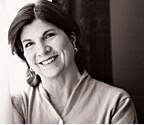
What was the cause, the point, the strategy? Suddenly many Americans started to realize that there was no good answer.
By Anna Quindlen
Newsweek (Oct. 31, 2005 issue)
The Vietnam Veterans Memorial is a tapering wall of black granite cut into the grass of Constitution Gardens. Maya Lin envisioned a scar when she designed it, a scar on this land, which is exactly right. Maybe someday his security detail could drive George W. Bush over to take a look. He'll be able to see himself in the reflective surface.
The list of names etched into the wall begins with a soldier who died in 1959 and ends with one who died in 1975. Nearly 60,000 dead are commemorated here. It is the most personal of war memorials. You can touch the cold names with your warm fingers.
The president never wanted the war in Iraq to be personal. His people forbade photographs of coffins arriving home. They refused to keep track of how many Iraqis had been killed and wounded. When "Nightline" devoted a show to the faces of soldiers who had died, one conservative broadcast outlet even pulled the program from its lineup.
The president wanted this to be about policy, not about people. Even that did not go well. The policy became a moving target. First there were weapons of mass destruction that were not there and direct links to the terrorists who attacked on September 11 that didn't exist. The removal of Saddam Hussein was given as the greatest good; it has been done. Then it became the amorphous goal of bringing freedom to the Iraqi people, as though liberty were flowers and we were FTD. The elections, the constitution, the rubble, the dead. Once again we were destroying the village in order to save it.
This all took an unfortunate turn for the administration during the president's vacation in August, when Cindy Sheehan showed up at his ranch. Say what you would about her politics or tactics, there was no doubt that she was a mother whose soldier son was now dead, and who wanted to know why. What was the cause, the point, the strategy? And suddenly many Americans started to realize that there was no good answer.
The Vietnam Memorial stands, in part, as a monument to blind incrementalism, to men who refused to stop, not because of wisdom but because of ego, because of the fear of looking weak. Not enough troops, not enough planning, no real understanding of the people or the power of the insurgency, dwindling public support. The war in Iraq is a disaster in the image and likeness of its predecessor.
During each election cycle, we ponder the question of whether character matters. Of course it does. Does anyone doubt that the continued prosecution of this war has to do with the personality of the commander in chief, a man who is stubborn and calls it strength, who wears blinders and calls it vision? When he vowed to invade Iraq, the advisers he heeded were those who, like him, had never seen combat. The one who had was marginalized and is now gone. The investigation of who leaked what to whom, of what the reporter knew and how she knew it, may be about national security and journalistic ethics, but at its base it is about something more important: the Nixonian lengths to which these people will go to shore up a bankrupt policy and destroy those who cross them on it.
The most unattractive trait of the American empire is American arrogance, which the president embodies and which this war elevated. It is not simply that we have a good system. It is the system everyone else should have. It is the best system, and we are the best people. We can mend rivalries so ancient that they not only predate our nation but the birth of Christ. We will install the leaders we like in a country we scarcely understand, leaders who will either be seen as puppets by their people or who will eventually turn against us. We have been here before.
"In Vietnam we didn't have the lessons of Vietnam to guide us," says David Halberstam, who won a Pulitzer Prize for his coverage of that war. "In Iraq we did have those lessons. The tragedy is that we didn't pay attention to them." Or maybe only our leaders did not. The polls show the American people have turned on this war much more quickly than they did on the war in Vietnam. Of course, they are the ones who pay the price.
Perhaps the leaders of the Democratic Party should take time off from their fund-raisers and visit the Vietnam Memorial, too. They should remember one of the most powerful men the party ever produced, Lyndon B. Johnson, and how he was destroyed by opposition to the war in Vietnam and bested by those brave enough to speak against it.
At least Johnson had the good sense to be heartbroken by the body bags. Bush appears merely peevish at being criticized. Someone with a trumpet should play taps outside the White House for the edification of a president who has not attended a single funeral for the Iraqi war dead. As I am writing this, the number of American soldiers killed is 1,992. By the time you read it, it may have topped 2,000. Will I be writing these same things when the number is 3,000, 5,000, 10,000? If we are such a great nation, why are we utterly incapable of learning from our mistakes? America's sons and daughters are dying to protect the egos of those whose own children are safe at home. Again.
© 2005 Newsweek, Inc.
Subscribe to:
Posts (Atom)

